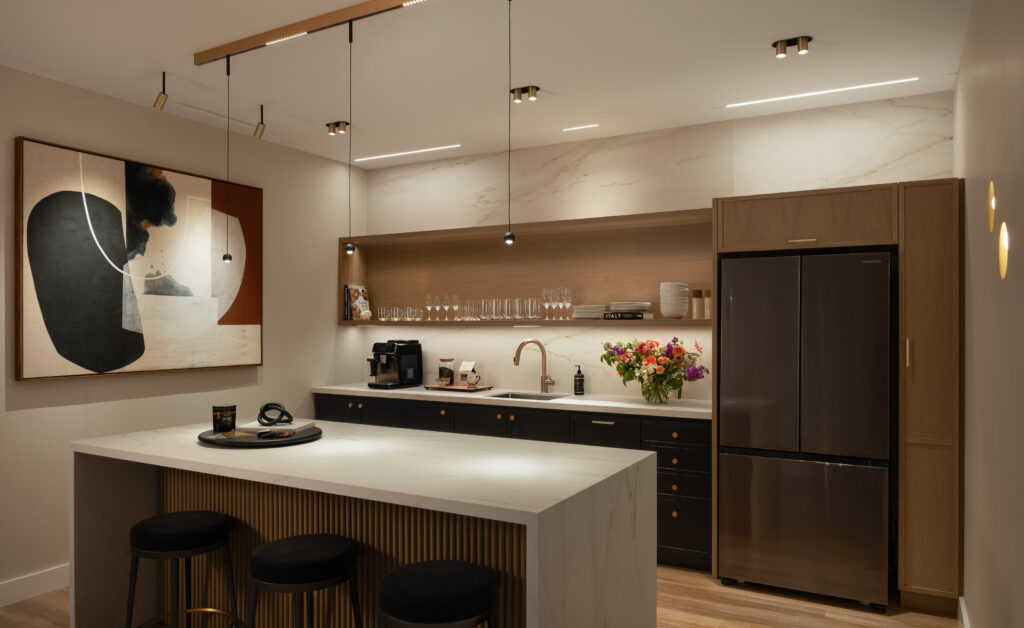

Walk into a room that simply feels right — calm at breakfast, easy to work in at noon, warm at ten — and it’s almost never one fixture doing the work. It’s several kinds of light, each doing one job, working together.
What stands out is rarely a single fixture you can point to. It’s the relationship between all of them.
If you’re renovating, building, or just trying to fix a room that never feels quite right — too bright, too flat, too dim in the corners — this guide walks through the layers and how to use them at home.
What Is Layered Lighting?
Layered lighting means using more than one kind of light in a room so the room can do more than one thing. Instead of a single bright fixture in the middle of the ceiling, you stack layers — a general base, focused task light, accents, and daylight — and control them separately.
Most homes already have enough brightness. The goal isn’t more light. The goal is light that’s better placed and better controlled.
Why Most Lighting Plans Feel Flat
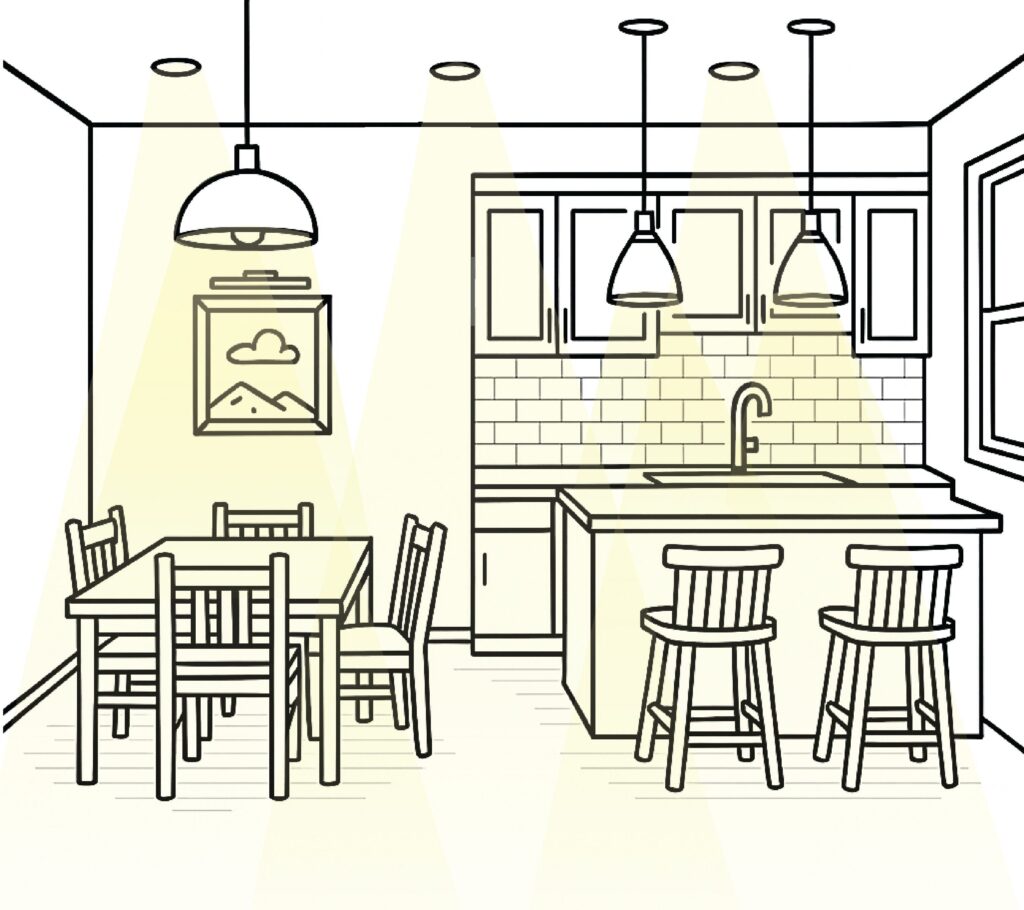
Most homes are lit by a grid of pot lights and a switch. Every corner gets the same light at the same level at every hour — which is why a freshly renovated room can still feel like a showroom for flooring rather than a place to live. The fix isn’t more light. It’s more kinds of light, controlled separately.
Why Layered Lighting Matters
Light shapes how a space feels and how it’s used, and layers are how you get to choose. They let you:
- Create depth and dimension, avoiding flat or harsh light and dark corners.
- Put light exactly where it’s needed, and nowhere it isn’t.
- Bring out the architecture — the finishes, the millwork, the focal points.
- Reduce glare and eye strain by spreading light across several gentler sources.
- Let a space shift from day to night, entertaining to unwinding, without changing anything but the light.
Done well, the layers disappear into the room. Nobody compliments the lighting. They say the room feels wonderful, and they can’t quite say why.
What’s the Difference Between Ambient, Task, and Accent Lighting?
Three layers do the daily work — and one more, at the end, that almost nobody writes about.
One note before the tour: some of the most important fixtures in a plan are the ones you choose with your eyes — the pendant over the island, the chandelier in the stairwell, the sconces flanking a credenza. These decorative pieces are the room’s jewellery, often contributing to several layers at once: a dining pendant adds ambient light; sconces keep a wall from going flat. They’re the pieces worth standing under before you buy.
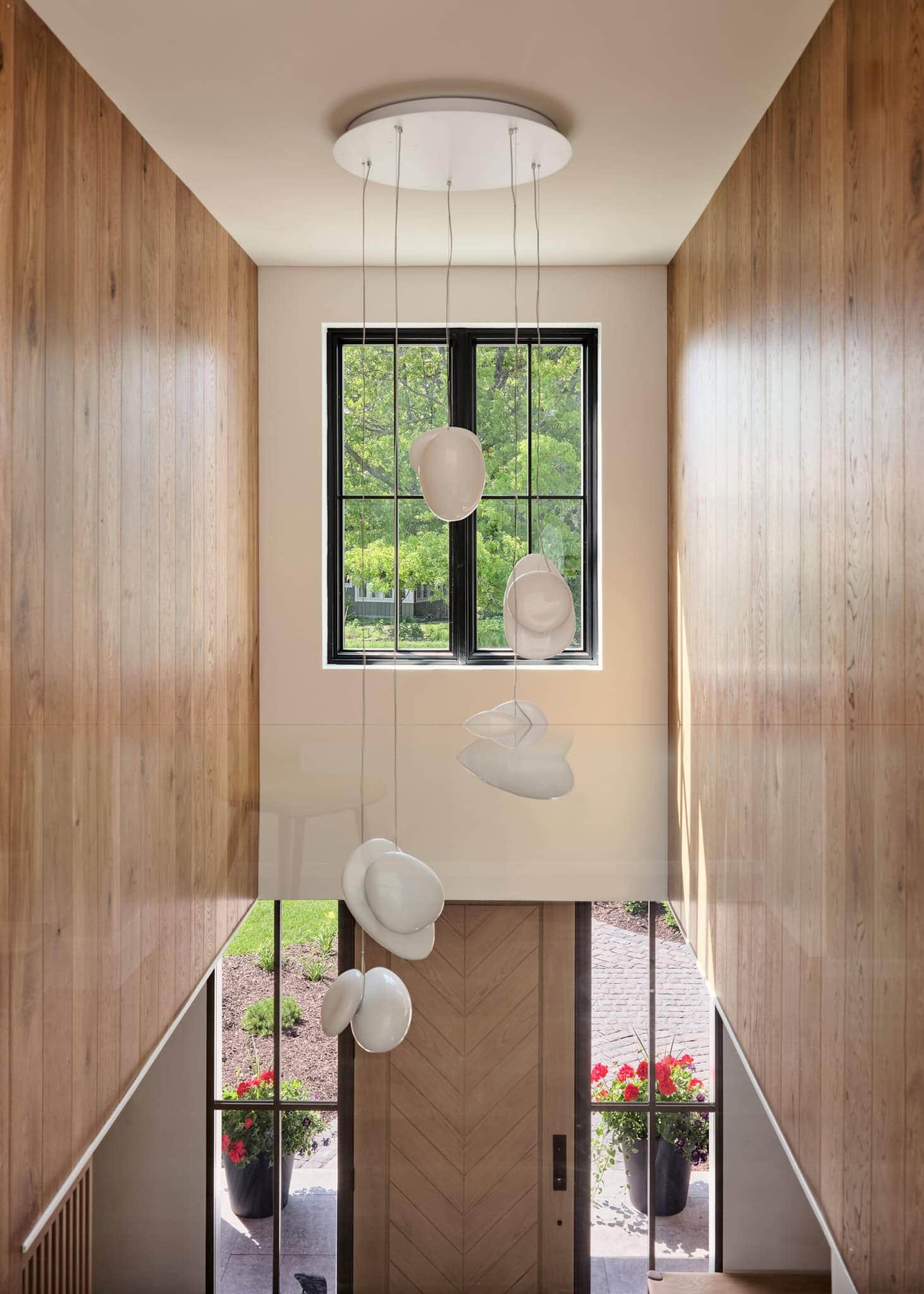
Ambient Lighting (The Layer You Stop Noticing)
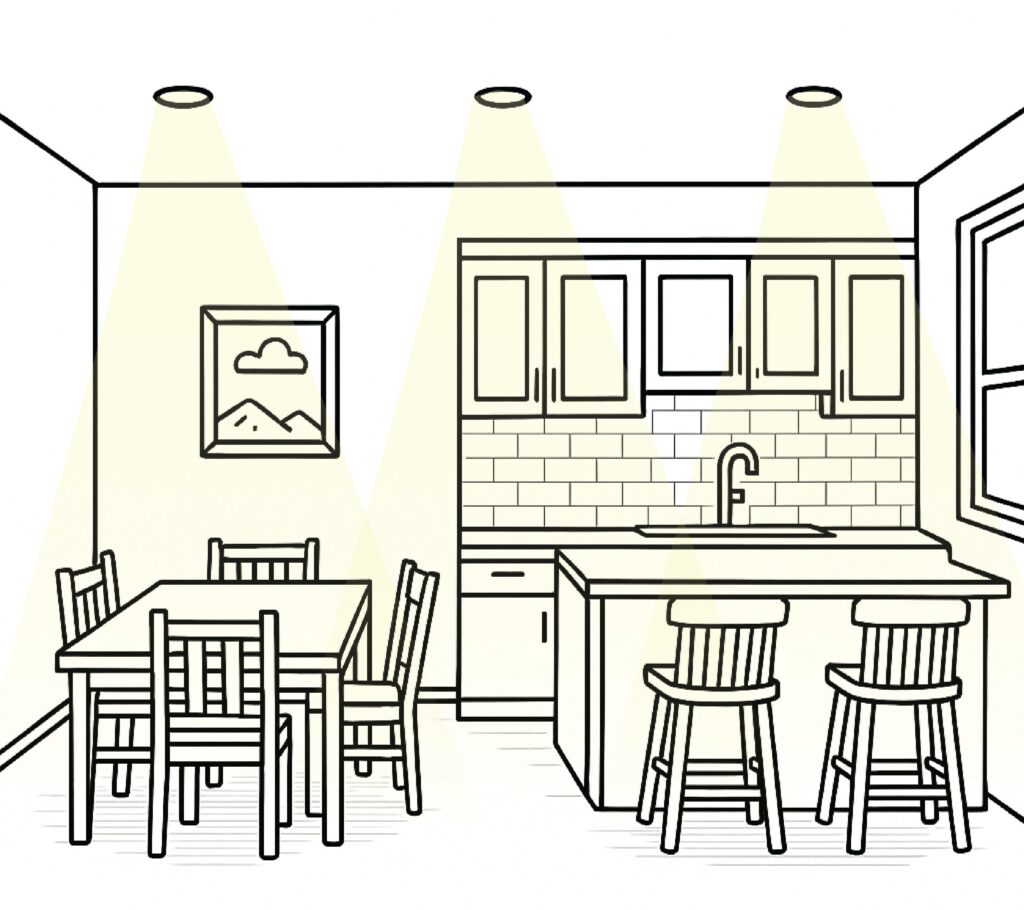
The best ambient light is the light you can’t find when you look for it. The room is simply bright enough, everywhere, and nothing is shouting.
Ambient lighting is the foundation: overall illumination that lets people move comfortably through a space and sets its general tone. Common types: recessed downlights, ceiling fixtures, cove lighting, linear systems, and indirect light tucked into millwork.
The most common mistake we see is ambient light set too high, trying to do every job at once. In most living spaces, a warm base — often around 2700K to 3000K, with the ability to dim in the evening — lets the ambient layer recede and the other layers do the talking. A concealed cove washing the ceiling plus a few recessed fixtures on dimmers reads bright, while the sources stay discreet.

Task Lighting (Where the Work Happens)
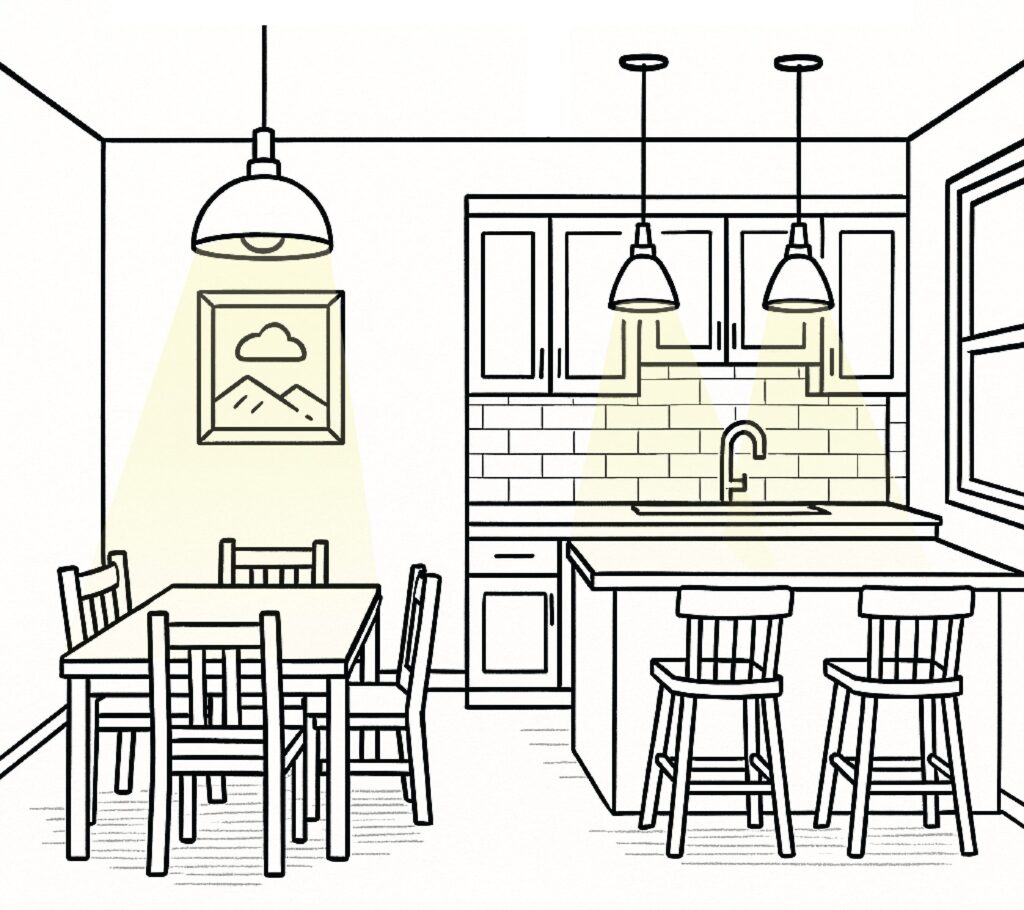
Task light is the difference between chopping onions comfortably and squinting into your own shadow.
It delivers focused, functional light exactly where an activity happens. Common types: under-cabinet lighting, island and sink lighting, desk and table lamps, bedside reading lights, vanity lighting, and adjustable recessed or track heads.
It’s the layer people forget to plan. In a kitchen, the under-cabinet strips over the counters; in a living room, the lamp beside the reading chair; at a vanity, the pair of lights that keep a face evenly lit. In a home office, it’s an adjustable desk lamp that keeps the work surface bright without washing out the screen. Task light is judged by one test: can you do the thing comfortably, without the whole room blazing?
Accent Lighting (Where a Room Becomes Memorable)
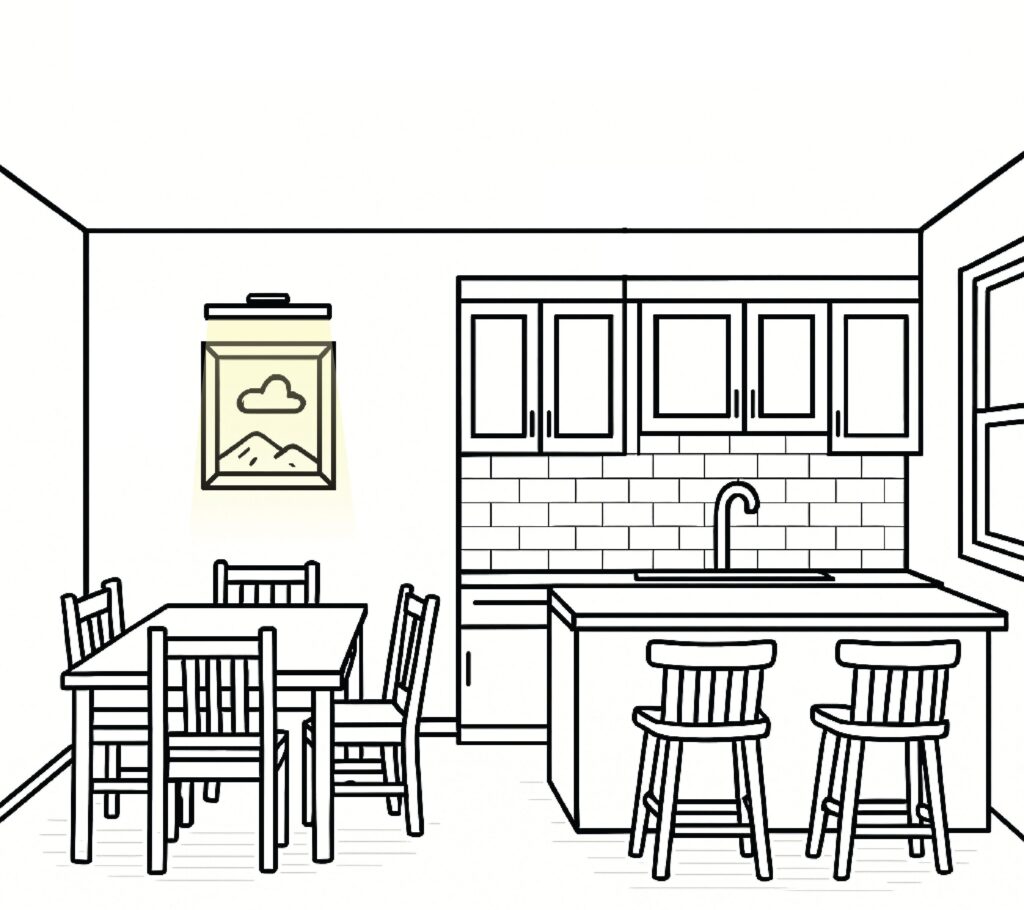
A stone wall at noon is just a wall. The same wall at night, under a grazing strip, has topography — every ridge throwing its small shadow.
That is accent lighting: light that draws attention rather than providing general illumination. Common types: wall washers and grazers, picture lights, toe-kick lighting, shelf and millwork lighting, and feature pendants that aren’t task-focused.
A picture light over a favourite painting. Shelf lighting giving the millwork depth. This layer is rarely essential for visibility. It is essential for character.

The Bonus Layer: Daylight
Every guide covers ambient, task, and accent. Almost none mention the strongest fixture in the house: the windows.
Daylight changes colour and intensity all day, and a plan that ignores it ends up fighting it — glare on the TV at 4pm, a great room that’s dazzling at noon and gloomy by dinner. Managing daylight is a lighting decision, not just a window-treatment choice.
Shades and window coverings let you soften harsh sun without blacking out the room, control glare on screens and work surfaces, and keep the view when you want it, privacy when you don’t. Motorized shades go a step further: they drop just enough to tame the afternoon and disappear at dusk, and tunable light can follow daylight’s arc indoors — warmer at waking, brighter midday, candlelight tones at night — so the electric layers feel in step with the sky.
Daylight is a layer because it needs to be managed, not just tolerated.

How Do You Layer Lighting in One Room?
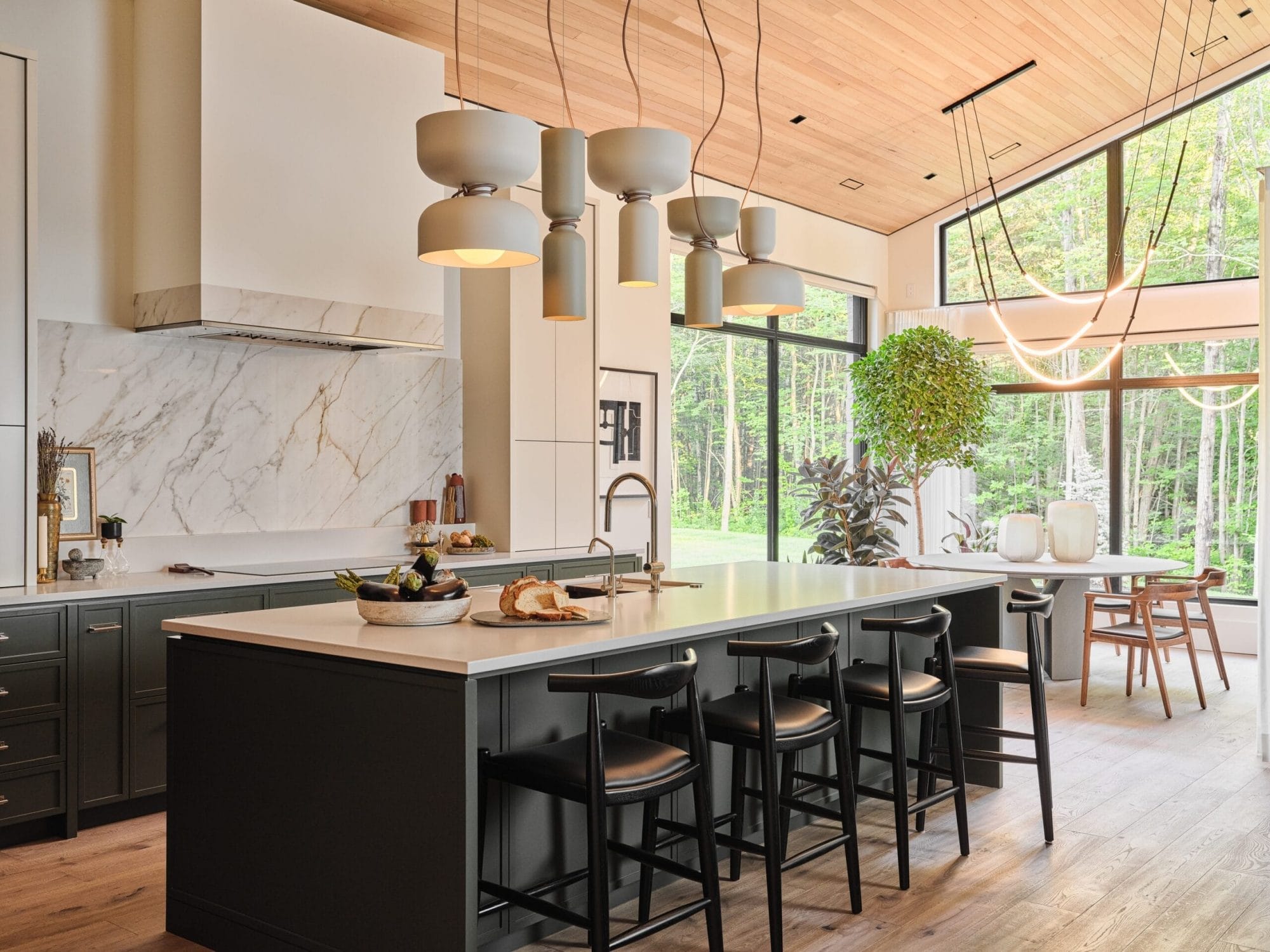
One great room, one evening. At 4pm the west windows are hot, so the shades drop to a woven fabric that cuts the glare but keeps the view; the electric layers barely register. By 6, dinner: ambient dims to a warm base, the island pendants come up for prep, and the grazer on the stone chimney starts earning its keep. At 8, one button — ambient nearly out, accents low, one lamp for the reader on the sofa.
Same room, three completely different places to be. That’s the whole idea of layering ambient, task, accent and daylight together.

Layered Lighting by Room
Here’s how the same layers show up in common rooms.
Living room — Ambient: soft ceiling light or cove on dimmers. Task: a reading lamp by the seating. Accent: a fireplace grazer or picture light.
Kitchen — Ambient: recessed or linear, evenly spaced. Task: under-cabinet strips and island pendants. Accent: lit shelving. Colour temperature is a design decision here — warmer light tends to feel more residential and intimate, cooler light brighter and more energetic; neither is automatically right.
Bedroom — Ambient: a soft ceiling fixture or indirect cove. Task: bedside reading lights, switched per side. Accent: a gently lit feature wall. Bedrooms want less light than most people expect.
Home office — Ambient: even, dimmable general light that keeps you comfortable on camera. Task: an adjustable desk lamp that lights the work surface without washing out the screen. Accent: a soft light behind the monitor or on a shelf to ease the contrast in the evening. Screens make this the room where lighting mistakes hurt daily — for the full treatment, see our home office lighting guide.
Why Dimmers and Scenes Matter
Layered lighting only works if the layers can be used independently. One dimmer on everything just makes the flat room dimmer.
- Separate the layers onto separate controls: “evening” is ambient down and accents up — not everything at half power.
- Scenes make it effortless: one button for Cooking, Dining, Movie Night, instead of six switches every time you use the room.
- The right pairing of drivers, dimmers and controls is invisible when done right — smooth, quiet, flicker-free — and impossible to ignore when it isn’t.
In plain terms: a lighting control system — Lutron HomeWorks is the one we design around — moves every layer together, and tunable light like Ketra can shift colour through the day on those same fixtures. You live in the light, not at the switch bank.
Common Lighting Mistakes (and the Fix)
- One overhead fixture doing the whole room → add lamps, sconces, or a cove to share the work.
- Very cool light in living spaces → warmer light reads comfortable in living rooms and bedrooms; cooler whites can still earn a place over a workbench.
- A tight grid of downlights and nothing else → balance with decorative fixtures and indirect light.
- No dimmers → full-on is one mode; evenings deserve the others.
- Treating the windows as someone else’s decision → unmanaged daylight is glare by mid-afternoon.
Every one of these is easy to avoid when the layers are considered early — and expensive to retrofit after drywall.
See It Before You Build It
Layered lighting is the hardest thing in a house to choose from a photograph. A photograph can show a kitchen. It cannot show what happens when the base settles, the pendants come alive, the daylight shifts, and the accents take over.
That’s why our Ottawa showroom runs all four layers — ambient, task, accent, and daylight. The scenes are already programmed, the shades are already moving, and the layers are already working together. You can watch ambient, task, accent, and daylight take turns carrying the room as the day changes — from afternoon to dinner to movie night — before choosing a single fixture.
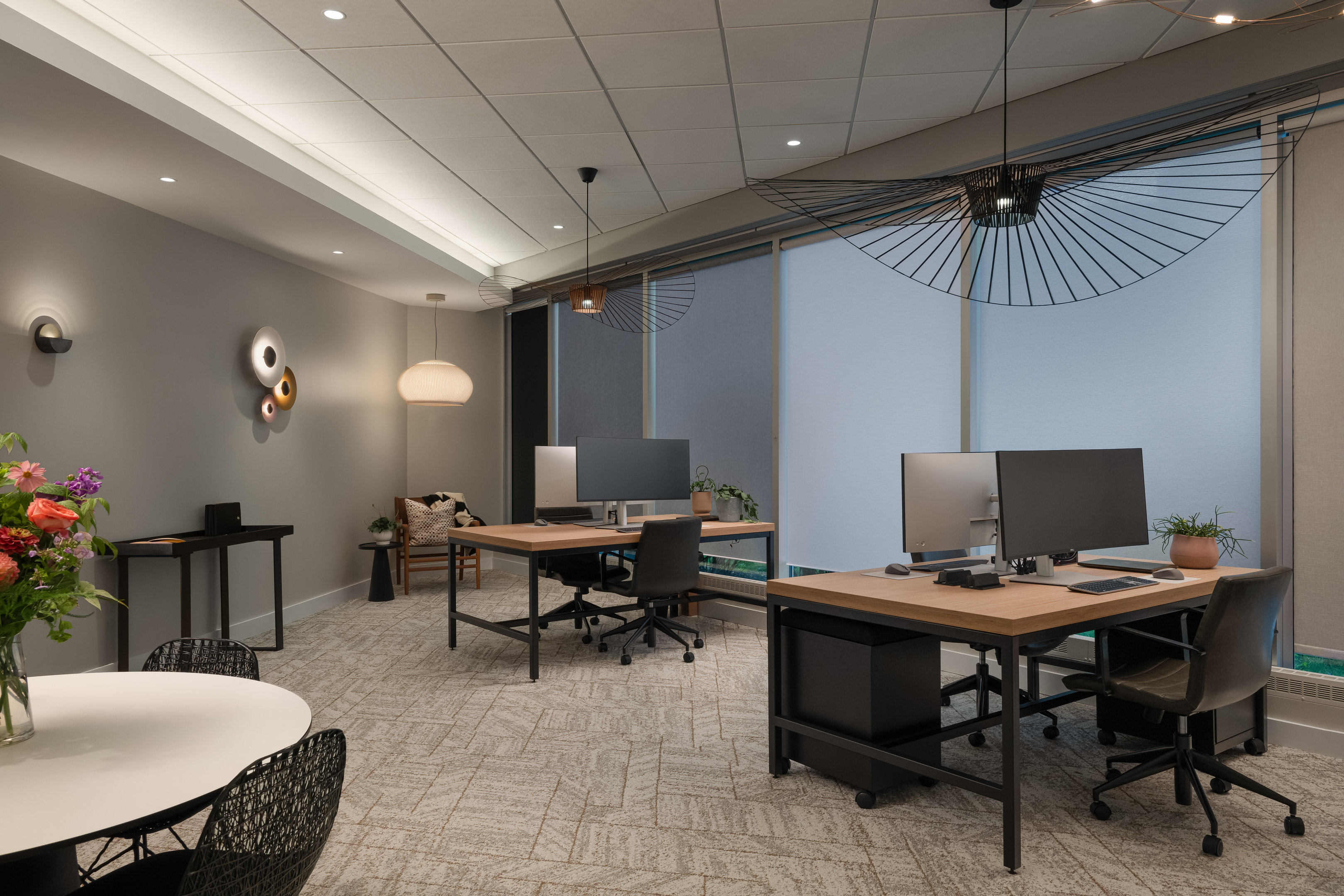
The best way to understand layered lighting isn’t to read about it. It’s to come and stand in it.
At Flux, our technical applications team supports this process by creating lighting layouts and photometric analyses to ensure even, well-balanced illumination. If you’re planning a project, we can walk you through layered lighting in the showroom and connect the design to the right fixtures, controls, and shading for your home.

Frequently Asked Questions
Ambient lighting provides general illumination, task lighting supports specific activities, and accent lighting highlights architectural features, artwork, and focal points.
Layered lighting combines ambient, task, accent, and daylight so a room can adapt to different uses and times of day.
It creates depth, reduces glare, improves functionality, and lets a space shift through the day without feeling flat or overlit.
Want to learn more? Check out our Glow Guide Reel hosted by our showroom manager, Chelsea!

Looking for more Light Reading? Take a look at our blog on Why Exterior Lighting Matters.