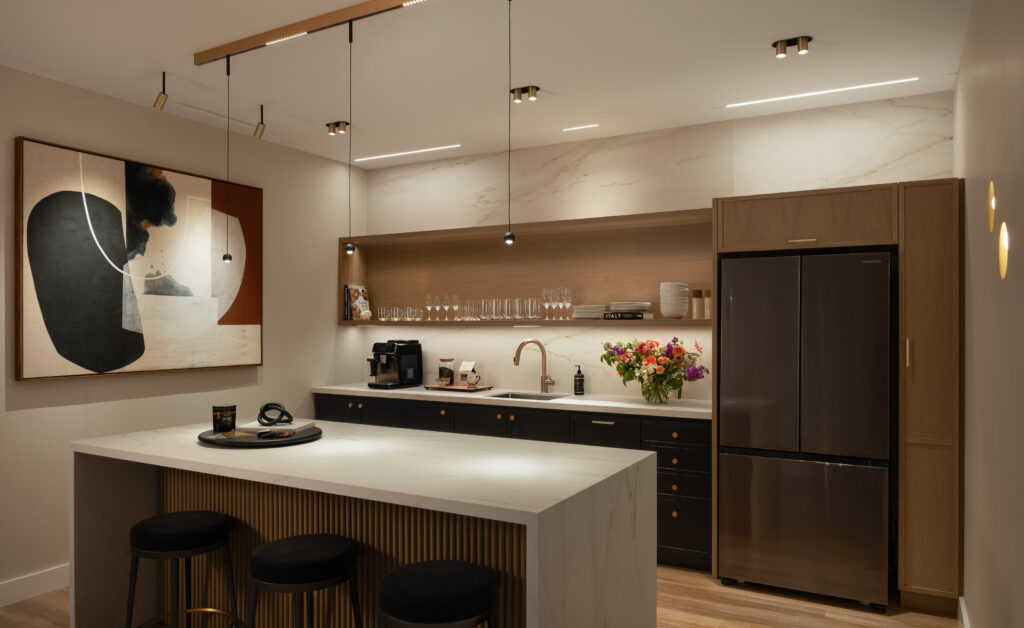

Why Layered Lighting Matters
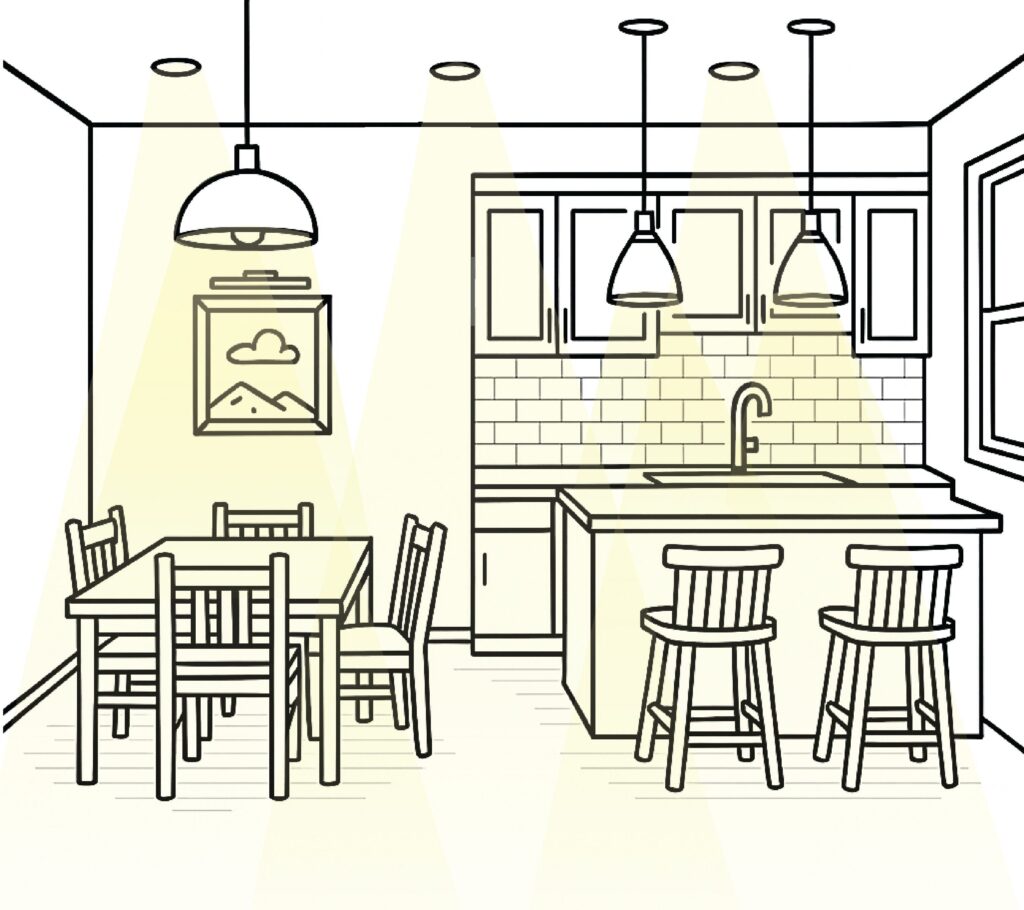
Layered lighting does more than illuminate a room. It shapes how a space feels and how it’s used. By combining ambient, task, and accent lighting, designers can:
-
Create depth and dimension, avoiding flat or overly harsh lighting, and dark corners.
-
Improve functionality by placing light exactly where it’s needed
-
Enhance architectural features, finishes, and focal points
-
Support flexibility, allowing spaces to shift from day to night or work to relaxation
When these layers are thoughtfully integrated, lighting becomes an invisible design tool, quietly elevating the entire experience of a space.
General / Ambient Lighting
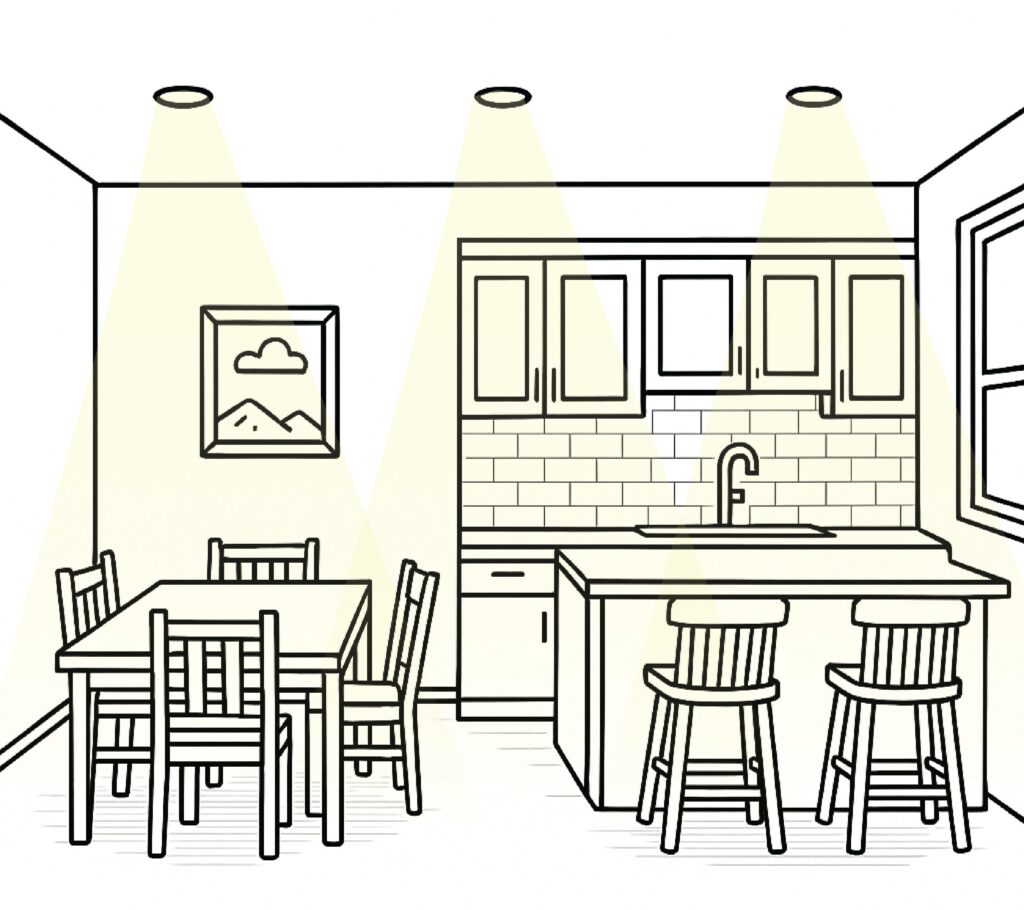
Ambient lighting is the foundation layer. It provides overall illumination, allowing people to move comfortably and safely through a space. This layer sets the general tone and brightness level of the room.
Common ambient lighting types include:
-
Recessed downlights
-
Surface-mounted or recessed ceiling fixtures
-
Cove lighting
-
Linear ceiling systems
-
Indirect lighting solutions
Task Lighting
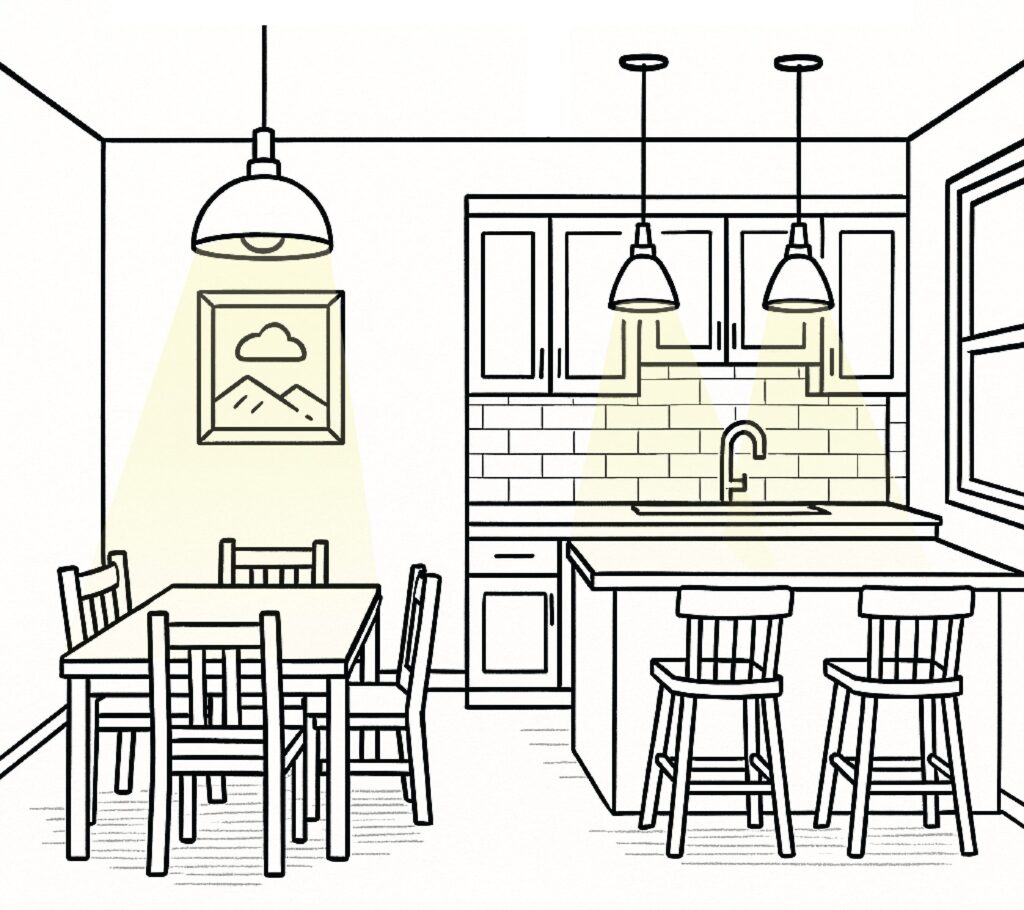
Task lighting supports specific activities by delivering focused, functional light exactly where you need it. This layer improves visibility and reduces eye strain without overpowering the space.
Common task lighting types include:
-
Under-cabinet lighting
-
Desk and table lamps
-
Vanity lights
-
Adjustable recessed or track heads
-
Pendants over work surfaces
Accent Lighting
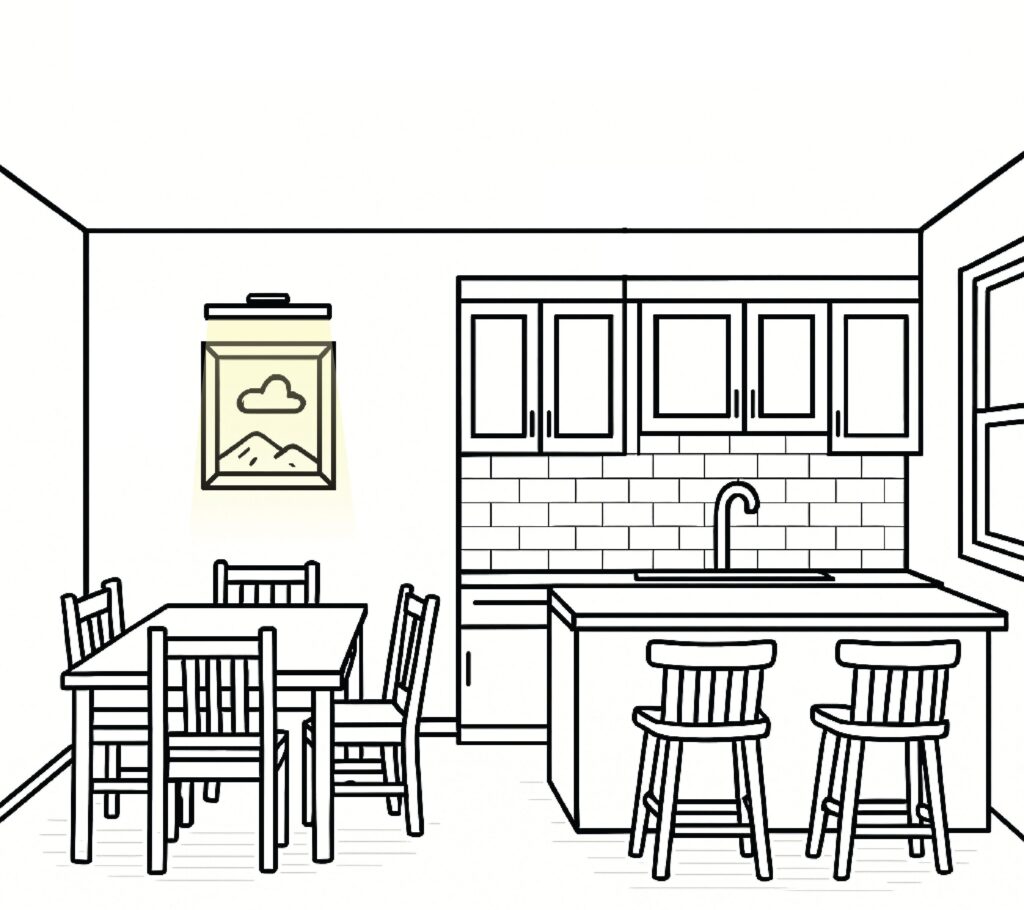
Accent lighting adds drama, contrast, and personality. It draws attention to architectural details, artwork, textures, or focal features, bringing depth and visual interest to a design.
Common accent lighting types include:
-
Decorative wall sconces
-
Wall washers and grazers
-
Picture lights
-
Toe-Kick Lighting
-
Decorative feature pendants that aren’t task focused
Bringing It All Together
The magic of layered lighting lies in how these layers interact. Ambient lighting establishes the base, task lighting supports function, and accent lighting adds character and emphasis. Therefore, when balanced correctly, the result is a space that feels comfortable, dynamic, and thoughtfully designed.
At Flux, our technical applications team supports this process by creating lighting layouts and photometric analyses to ensure even, well-balanced illumination, helping bring layered lighting concepts to life with confidence and precision.
Want to learn more? Check our our Glow Guide Reel hosted by our showroom manager, Chelsea!
Looking for more Light Reading? Take a look at our blog on Why Exterior Lighting Matters.